
Field Mice 101: Identification, Behaviour, and Prevention. How to Identify a Field Mouse.
The field mouse is a small nocturnal rodent which typically lives in fields, woods and gardens. They are commonest mouse in the UK and their scientific name is Apodemus sylvaticus. They are seen all year round. Also known as a wood mouse, a long-tailed field mouse, a common field mouse and a European wood mouse. They are native to the UK. Field mice in the USA are a different species which are also known as deer mice. We will cover theses in our next post.
In this article we will discuss;
How To Identify A Field Mouse
5 Tips On How To Prevent Field Mice Damaging Your Property
How do They Behave?
What is their Distribution?
What do Field Mice Eat?
Breeding Behavior
Which Animals Eat Field Mice?
Interesting Field Mouse Facts
How To Identify A Field Mouse
They can be identified by their yellow-brown or brown fur, white bellies, long tails and large black eyes in comparison to other small rodents. Voles may be confused with field mice; check out our image for tips on how to identify a field mouse. They are also similar to house mice except that they have larger ears and eyes.
Tail length: 7-9cm
Body length; 8-10cm
Weight: 25g
Lifespan: 1 year
5 Tips On How To Prevent Field Mice Damaging Your Property
1) They are tiny and can fit through a gap of a quarter of an inch (6-7mm), about the size of the end of a pencil. This makes keeping them out very difficult is some situations. If you want to prevent them damaging your property the first thing you need to do is to block up all the holes and entry points. Fit door sweeps and edging around poorly fitting doors. Fill gaps under the edges of roof tiles and corrugated roofing. Make sure they can’t climb up cabling conduits or drainage pipes. Always use chew-proof materials such as wire wool, cement or metal sheeting when filling gaps.
2) Food will entice them into your house, garage or car. Remove all traces, along with waste and packaging wherever possible. Keep animal feed and other edible material in metal bins. Avoid feeding your pets on the floor outside and keep birdseed off the floor.
3) Remove all sources of water, such as puddles, dripping taps and any other standing water wherever possible. Mice need water and will hunt for it in dry conditions. Don't give them another reason to enter your property,
4) When rodents have previously been on your property they will leave a scent trail. This will remain for some time, even if you remove the rodents; others will soon follow the trail if you don't get rid of it, causing the problem to return. Pressure wash the area if possible, use soap, disinfectant and scrubbing brushes to remove oils and scents. Use strong essential oils such as peppermint and other strong odors such as camphor and cayenne pepper to masks odors and repel field mice. For more information on this check out or post on non-toxic rodent repellents.

RatMat Protecting a Tesla from Field Mice
5) When everything else has failed, RatMat will succeed. Acting as an electric fence on the floor you can create a perimeter around your car or a strip across a doorway. This will prevent field mice damaging your property. We find it to be 100% effective at keeping mice out in almost all situations. This is despite the system usually being used in situations where there are a large number of rats or mice around. Often conventional pest control has failed. Visit our homepage to find out more.
What is the Habitat of a Field Mouse?
If you are a homeowner, you are most likely to find one of these in your garden. Other places you may see them include;
Grassland
Hedgerows
Farms
Wood
Heathland
Moors
You are more likely to find them in woodlands in the winter as these give them better shelter from the elements. They live in burrows under the ground which they dig to keep their families warm and safe from predators. As the burrows are very small, predators cannot reach them. They use plants to make nests in the burrows, keeping them warm.
How do they Behave?
Field mice are nocturnal which means that they are more active at night than during the day. This helps to protect them from predators, although breeding females often forage more in the daytime as this can make it easier to find food. Interestingly, they may make markers when foraging, using natural objects they find lying around. They use these prominently as landmarks to navigate and find their way around. They are timid and are good climbers. They run fast for their size, making them difficult for predators to catch.
What is their Distribution?
They are native to the UK and in Europe range as far north as Scandinavia and east to the Ukraine. They are also commonly found on several of the islands in the Mediterranean, as well as northwest Africa.
What do Field Mice Eat?
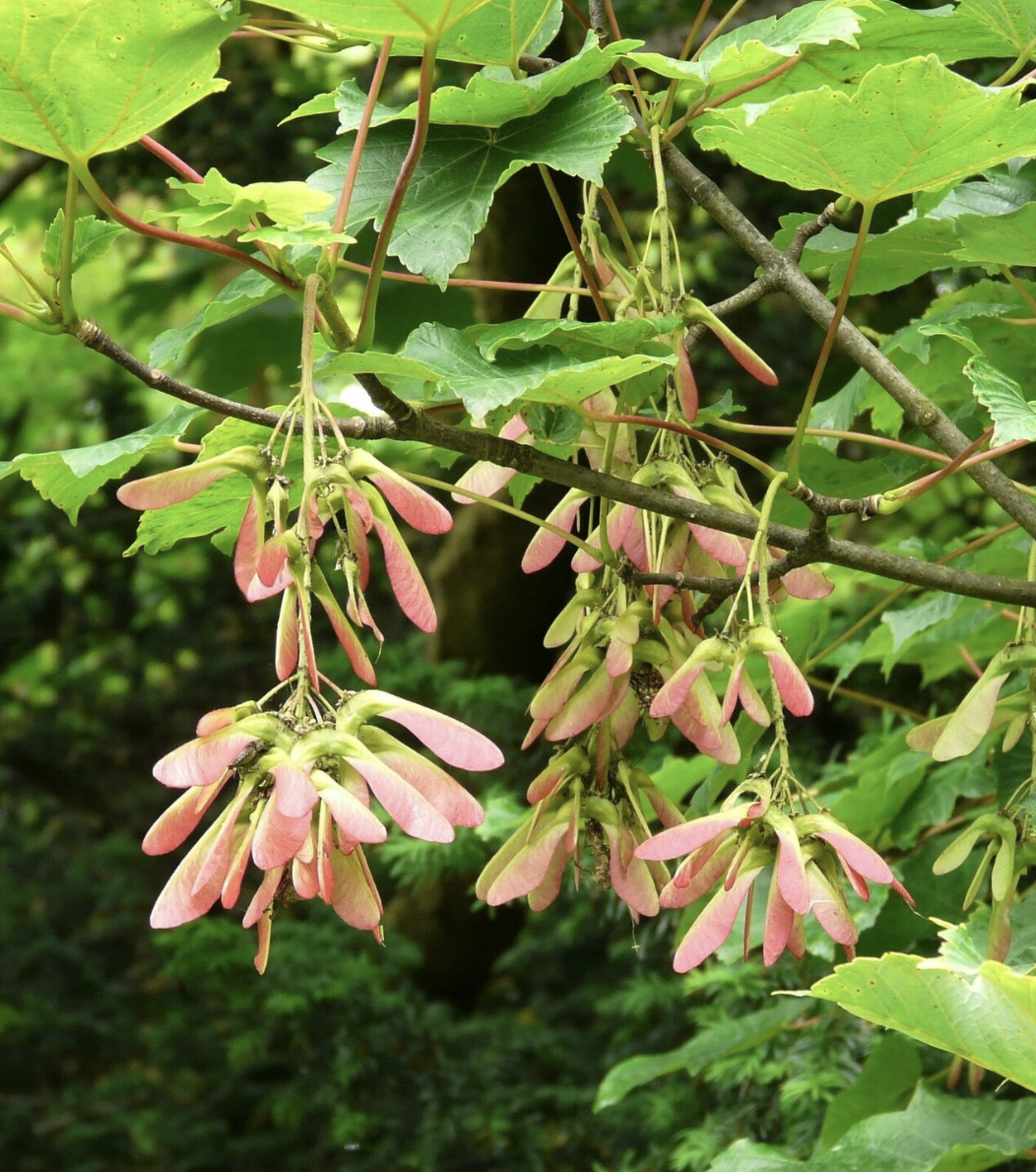
Field Mice Love Eating Sycamore Seeds
They like to eat berries and seeds which they store underground. They predominantly eat seeds from trees such as sycamore, oak, hawthorn, ash, lime and beech. As they are omnivores they also eat nuts, fungi and insects. They harvest these in the autumn and save them for the winter when food is scarce. They store them in their burrows which is a great way for seeds to be dispersed as many of them will grow into trees before they are eaten.
Breeding Behaviour
Field mice will often mate on multiple occasions and with multiple mates. This can result in a litter containing offspring from more than one father. Females can have up to an astonishing six litters a year. Each litter contains between four and eight pups; this is the name for a baby. They have a very short gestation period of only, 23-26 days. This means that one breeding pair can have up to 48 babies every year! They also reach sexual maturity very quickly in just 4 to 8 weeks. This means that if each baby continues to reproduce at the same rate and none are eaten or die, after one year one pair could have more than 3000 offspring! Their breeding season is from around March to October.
Which Animals Eat Field Mice?
Predators include;
Owls
Kestrels
Eagles
Falcons
Buzzards
Foxes
Cats
Dogs
Badgers
Snakes
Weasels
Interesting Field Mouse Facts
They can shed the end of their tails to escape a predator, although it may not regrow.
Instead of hibernating they go into a state called torpor. This involves a reduced body temperature and metabolic rate. This is usually shorter than hibernation and is a lighter state.
Their babies are called pups.
They can carry hantavirus which is dangerous to humans. It causes fatigue, fever, muscle aches, headaches, dizziness and chills. It can also cause vomiting, diarrhoea, abdominal pain and. internal bleeding. It can be fatal.
In winter they may eat hibernating bats but this has not been proven.
They sometimes use twigs and leaves as markers to help them navigate when they are looking for food.
They can fit through a hole the size of the end of a pencil.
A breeding pair can create more than 3000 offspring in a year.
References
Photo by Nick Fewings on Unsplash
Vole photo by Heather Wilde on Unsplash
Sycamore seeds by Richard Sutcliffe, CC BY-SA 2.0 <https://creativecommons.org/licenses/by-sa/2.0>, via Wikimedia Commons
https://www.wildlifetrusts.org/wildlife-explorer/mammals/wood-mouse
xhttps://en.wikipedia.org/wiki/Wood_mouse
By Dr Toby Bateson for Hammer Technologies Ltd